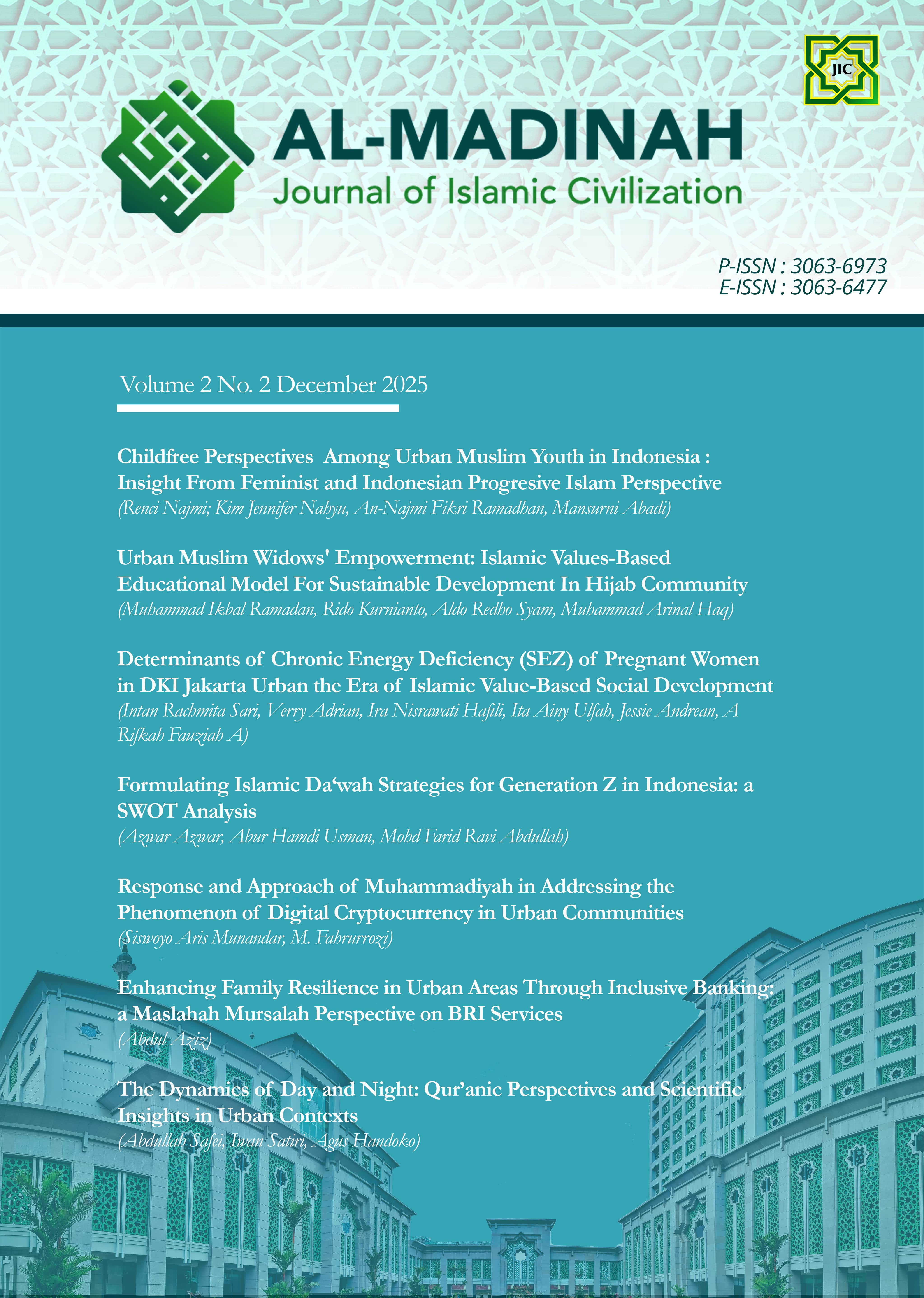
Formulating Islamic Da‘wah Strategies for Generation Z in Indonesia: a SWOT Analysis
DOI:
https://doi.org/10.70901/5hzczr93Keywords:
da‘wah, Generation Z, SWOT analysis, digital media, da‘wah strategyAbstract
This study aims to identify the strengths, weaknesses, opportunities, and threats (SWOT) of Islamic da‘wah targeting Generation Z (Gen-Z) in Indonesia, focusing on the formulation of innovative and adaptive strategies. Employing a qualitative descriptive-analytical method, the research draws on participatory observation and document analysis. The findings show that Islamic da‘wah has significant strengths in adapting to digital platforms such as social media and video-sharing apps, with visually engaging content that resonates with Gen-Z. Community-based approaches also foster emotional engagement with Islamic values. However, weaknesses remain, including limited digital literacy among preachers and the lack of structured, consistent content. Conventional da‘wah models are often too formal, making them less appealing to Gen-Z’s preference for interactive and expressive communication. Opportunities lie in the expansive reach of digital media and Gen-Z’s growing interest in social and global issues. Da‘wah that promotes values like justice, compassion, and social responsibility aligns with Gen-Z’s concerns. Nevertheless, several threats challenge the effectiveness of da‘wah, including the unregulated flow of online information, exposure to misleading or radical content, and the influence of pop culture and hedonism, which can fuel skepticism toward religious symbols. Social polarization further necessitates inclusive and non-dogmatic approaches. The study concludes that effective da‘wah strategies should strengthen digital competencies among da'i, develop structured content, and align messaging with Gen-Z’s digital culture while emphasizing Islam’s universal values. A strategic, contextual approach is essential for ensuring that Islamic da‘wah remains relevant, engaging, and impactful for Gen-Z.
Downloads
References
Abdurrahman, Q., & Badruzaman, D. (2023). Tantangan dan peluang dakwah islam di era digital. KOMUNIKASIA: Journal of Islamic Communication and Broadcasting, 3(2), 152–162.
Agung, D. A., Erwita, M. A., Mokoginta, D. D., Memarista, G., Sancoko, A. H., Sulistyo, A. P., Kristina, N., Mawasti, A., & Kristyanto, V. S. (2022). Community Engagement For Development: Gen Z as The Agent of Innovation to Achieve SDGs. PeKA: Jurnal Pengabdian Kepada Masyarakat, 5(2), 159–170.
Amanah, S., Sadono, D., Fatchiya, A., Sulistiawati, A., Aulia, T., & Seminar, A. U. (2023). Strengthening the Competencies of Gen-Z Students as Future Change Agents: Learning from Extension Science and Communication of Innovation Course (KPM121C). International Journal of Information and Education Technology, 13(10), 1646–1655.
Ari Hartawan, Imamul Arifin, & Yogi Dwi Prasetyo. (2022). Efektivitas Aplikasi Islami Terhadap Muslim Generasi Z dalam Meningkatkan Kemampuan Membaca Al-Qur’an. Jurnal Online Studi Al-Qur’an, 18(1), 135–148. https://doi.org/10.21009/jsq.018.1.07
Auliya, N. H., Andriani, H., Fardani, R. A., Ustiawaty, J., Utami, E. F., Sukmana, D. J., & Istiqomah, R. R. (2020). Metode penelitian kualitatif & kuantitatif. CV. Pustaka Ilmu.
Bhalla, R., Tiwari, P., & Chowdhary, N. (2021). Digital natives leading the world: paragons and values of Generation Z. In Generation Z marketing and management in tourism and hospitality: The future of the industry (pp. 3–23). Springer.
Boffone, T. (2022). Do you want to make a TikTok? Is it time to BeReal?: Gen Z, social media, and digital literacies. Journal of Language & Literacy Education, 18(2), 1–7.
Djamba, Y. K. (2002). Social research methods: Qualitative and quantitative approaches. Teaching Sociology, 30(3), 380. https://doi.org/http://dx.doi.org/10.2307/3211488.
Gawda, B., & Korniluk, A. (2022). Multitasking among modern digital generations Y and Z. Journal of Modern Science, 49(2), 421–430.
GoodStats. (2023). Sensus BPS: Saat Ini Indonesia Didominasi Oleh Gen Z. https://data.goodstats.id/statistic/sensus-bps-saat-ini-indonesia-didominasi-oleh-gen-z-n9kqv.
Iskandar, H. (2023). Dakwah Digital Dari Gen Z Untuk Gen Z (Gerakan Dakwah Media Pesantren). JDARISCOMB: Jurnal Komunikasi Dan Penyiaran Islam, 3(1).
Mihelič, K. K., Lim, V. K. G., & Culiberg, B. (2023). Cyberloafing among Gen Z students: the role of norms, moral disengagement, multitasking self-efficacy, and psychological outcomes. European Journal of Psychology of Education, 38(2), 567–585.
Mulyadi, S., Basuki, A. M. H., & Prabowo, H. (2019). Metode Penelitian Kualitatif dan Mixed Method (Cet. I). PT. RajaGrafindo Persada.
Nikmah, F. (2020). Digitalisasi dan Tantangan Dakwah di Era Milenial. Muẚṣarah: Jurnal Kajian Islam Kontemporer, 2(1), 45–52.
Osita, I. C., Onyebuchi, I., & Justina, N. (2014). Organization’s stability and productivity: the role of SWOT analysis an acronym for strength, weakness, opportunities and threat. International Journal of Innovative and Applied Research, 2(9), 23–32.
Rangkuti, F. (2015). Analisis SWOT Teknik Membedah Kasus Bisnis. Gramedia Pustaka Utama.
Sakitri, G. (2021). Selamat Datang Gen Z, Sang Penggerak Inovasi! Forum Manajemen, 35(2), 1–10.
Serbanescu, A. (2022). Millennials and the Gen Z in the Era of Social Media. Social Media, Technology, and New Generations: Digital Millennial Generation and Generation Z, 61.
Siti Nuri Nurhaidah, Nabila Lubis, & Hidayatullah. (2025). The Role of Cyber-Creation in Da’wah for the Development of Urban Muslim Communities. Hayula: Indonesian Journal of Multidisciplinary Islamic Studies, 9(2), 259–280. https://doi.org/10.21009/hayula.009.02.06
Soleh, M., & Kuncoro, I. (2023). Menggali Budaya Baru Dan Implikasinya Bagi Keagamaan Gen-Z: Perspektif Sosiologi Dan Antropologi Masyarakat Di Era Kontemporer. Al Irsyad: Jurnal Studi Islam, 2(2), 83–92.
Staniyah, A. M., Efendi, N., & Mashudi, K. (2024). Digitalisasi Dakwah: Tantangan dan Strategi Menginspirasi di Era Teknologi. El-Mujtama: Jurnal Pengabdian Masyarakat, 4(4), 1830–1846.
Sugiyono. (2022). Metode penelitian kuantitatif (ke-3). Alfabeta.
Suharyono, Y. (2022). Bridging Digital Communication Amongst Digital Natives. MUKASI: Jurnal Ilmu Komunikasi, 1(1), 21–30.
Ummah, A. H., Khatoni, M. K., & Khairurromadhan, M. (2020). Podcast sebagai strategi dakwah di era digital: Analisis peluang dan tantangan. KOMUNIKE: Jurnal Komunikasi Penyiaran Islam, 12(2), 210–234.
Uyuni, B. (2023). Media Dakwah Era Digital. Penerbit Assofa.
Wibowo, A. (2021). Dakwah berbasis media dan komunikasi visual. Jurnal Bimbingan Penyuluhan Islam, 2(2), 179–198.
Wijaya, A., & Muktarruddin, M. (2024). Gaya Komunikasi Akun Tiktok@ msalbaniquotes dalam Menyampaikan Nilai-Nilai Islam di Kalangan Gen-Z. Al Qalam: Jurnal Ilmiah Keagamaan Dan Kemasyarakatan, 18(3), 1966–1977.
Downloads
Published
Issue
Section
License
Copyright (c) 2025 Azwar Azwar, Abur Hamdi Usman, Mohd Farid Ravi Abdullah

This work is licensed under a Creative Commons Attribution 4.0 International License.